SEO guide
Slay the Spire 2 Best Builds
A build hub for Slay the Spire 2 that separates reliable build paths from high-roll combos and patch-sensitive experiments.
Quick answer
Best-build pages should not list fantasy combos as if they are common. Rank builds by consistency, support density, boss coverage, and how easy they are for returning players to pilot.

What to check first
Use this page as a practical search-intent answer first, then follow the related database links for deeper card, relic, character, boss, and patch context.
- Ask whether the build solves Act 1 before calling it strong.
- Separate character-specific builds from generic relic/card packages.
- Mark high-roll combos as low consistency.
Reliable builds beat perfect builds
A best-build page should not reward the loudest highlight. The strongest builds are the ones that survive imperfect reward screens, bad opening hands, and awkward boss matchups. When a video shows a broken deck, the article should ask what made the deck reliable before it became broken.
- Score builds by startup safety, support density, and boss coverage.
- Separate stable build paths from rare combo finishes.
- Link every build to the character and card pages that explain its pieces.
Recommended build matrix
Use this matrix as a scan-first starting point, not a solved meta list. Each lane is ranked by how easy it is to stabilize, how much support it needs, and what can still kill it before the payoff arrives. Follow the linked guide when a build matches your current character, rewards, and route pressure.
- Ironclad direct damage into block payoff - Reliability: High - Required support: early attacks, practical block, one boss-scaling plan - Beginner safety: High - Boss caveat: needs a way to finish long fights before defense alone runs out - Start with Ironclad Build Guide.
- Silent shiv or attack-density lane - Reliability: Medium - Required support: draw, discard or hand-size help, enough block to survive setup turns - Beginner safety: Medium - Boss caveat: weak if the deck only adds small attacks without scaling or defense - Start with Silent Shiv Build.
- Defect beginner orb shell - Reliability: Medium - Required support: plain damage, basic block, orb generation, and enough time to set up - Beginner safety: Medium - Boss caveat: slow engines need proof that turns one and two are safe - Start with Defect Beginner Build.
- Necrobinder resource-control lane - Reliability: Medium-Low - Required support: stable Souls or Doom timing, companion protection, and defensive turns before payoff - Beginner safety: Low-Medium - Boss caveat: fragile when the deck cannot defend while setting up - Start with Necrobinder Build Guide.
- Regent stable setup lane - Reliability: Medium-Low - Required support: safe opening turns, reward-screen discipline, and proof that payoff cards solve the next route problem - Beginner safety: Medium when played conservatively - Boss caveat: high-ceiling rewards such as Hegemony or Celestial Might need defense and draw before they are real builds - Start with Regent Guide.
- Silent infinite or rare combo lane - Reliability: Low - Required support: several specific cards, draw density, cost control, and enough safety to assemble pieces - Beginner safety: Low - Boss caveat: highlight wins should stay experimental until repeated runs prove consistency - Treat as advanced testing, not first-run advice.
Best-build videos need consistency scoring
A broad best-build guide should be used to build the scoring system for this page: startup safety, payoff speed, boss coverage, relic dependence, and how often the plan works after ordinary reward screens. The article can still mention spectacular builds, but it should rank reliable paths first.
- Give every build a reliability label before recommending it.
- Ask whether the build survives bad opening hands and weak rewards.
- Send character-specific builds to the matching character guide.
New-character builds should not share one template
Videos that compare every new-character build are useful for building a hub, but each character needs different proof. Necrobinder build advice should explain resource timing, Regent advice should explain stability, and Defect advice should prove setup survival before the engine is online.
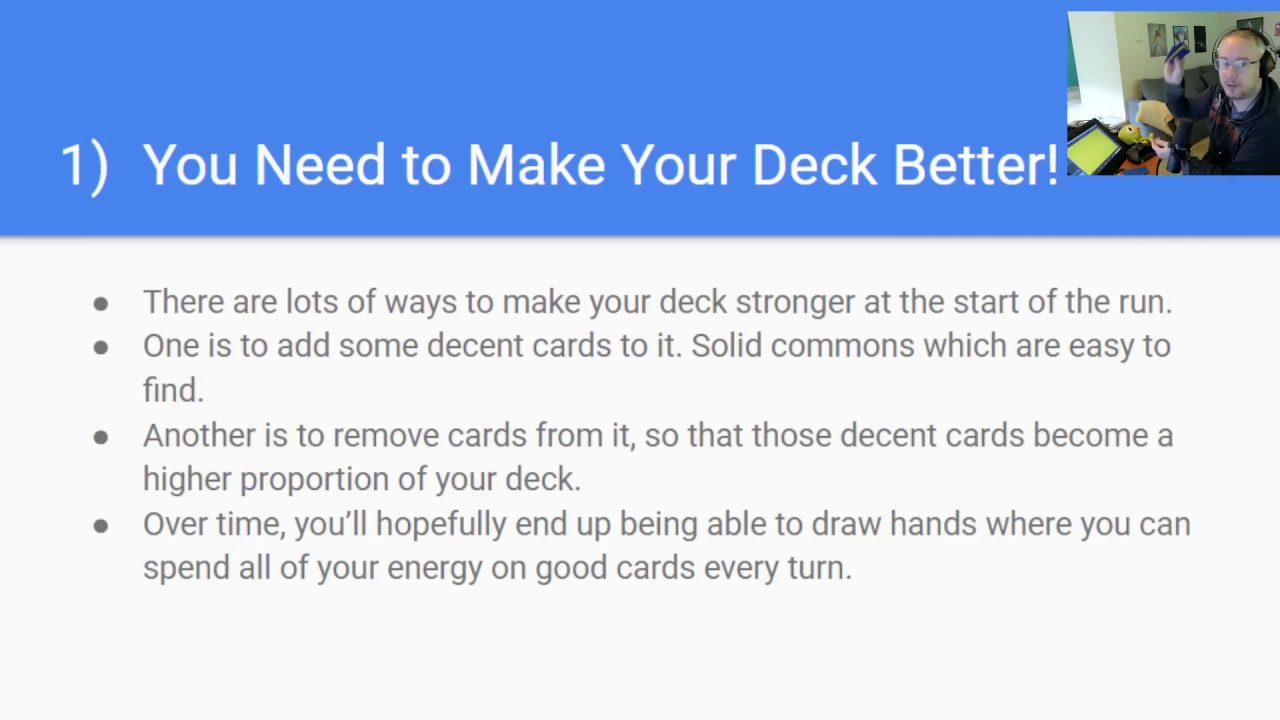
- Split build advice by character mechanics and difficulty curve.
- Create related links from each build to cards, relics, bosses, and character pages.
- Avoid ranking a build highly if the video only shows the finished deck.
Best-build claims need weakness moments
The most useful footage for a build page is not always the winning turn. A weakness moment shows whether the deck can recover when it misses draw, lacks block, or faces a boss that punishes slow setup. Without that evidence, the page should label the build as exciting but unproven.
- Capture the fight where the build almost fails.
- Explain what support piece prevents the failure next time.
- Mark highlight-only builds as low confidence until repeated runs confirm them.
Extreme build videos need repeatability labels
A build described as outrageous, disgusting, or broken can still be useful source material, but the page should translate the claim into repeatability labels. What pieces are required, how early does the deck stabilize, what matchups punish it, and how often would a normal run see the same line?
- List required pieces before describing the payoff.
- Check whether the build has a fallback plan.
- Keep highlight names out of the recommendation table until consistency is proven.
Editorial note
This page is part of the first English-only content batch. It is written conservatively for Early Access and should be tightened whenever a major patch changes public information or run data.