SEO guide
Slay the Spire 2 Strategy Guide
A broad strategy guide for Slay the Spire 2 covering drafting, routing, boss prep, patch notes, and tier-list interpretation.
Quick answer
The strategy page should be the central hub for players who need principles before they need individual card pages.
What to check first
Use this page as a practical search-intent answer first, then follow the related database links for deeper card, relic, character, boss, and patch context.
- Draft for the next fight before chasing a finished build.
- Route around current deck weaknesses, potion coverage, and upgrade needs.
- Use patch notes and tier lists as context, then judge the current deck state.
Skipping is a strategy skill
Many decks lose because they accept too many medium cards. Skipping is not passive; it protects draw quality, keeps key cards appearing on time, and prevents the deck from becoming a pile of half-plans. A card is worth adding only when it improves a real fight window or strengthens a plan that already has support.
- Skip cards that do not improve the next danger window or the main plan.
- Add support only when the payoff is already plausible.
- Watch deck size together with draw, energy, and card quality.
Deckbuilding principles before archetype labels
A deck should earn its archetype label through solved jobs, not wishful drafting. Before calling a run a block build, shiv build, orb build, or companion build, check whether it can deal practical damage, block without perfect draw, scale before bosses outlast it, and recover when the key card is late. Archetypes are useful shorthand after the deck has coverage; they are dangerous when they make the player ignore the next fight.
- Start with jobs: damage, block, scaling, draw, and bad-hand recovery.
- Add synergy when the support is already visible or the next path is safe enough to wait.
- Use character pages for archetype details after the shared deckbuilding checks are covered.
Read mechanics as timing systems
New and returning characters should be learned by timing before tier placement. A mechanic asks the deck to spend something, wait for something, or convert one resource into another. That means the strategy question is not simply whether the payoff is powerful. It is whether the deck can survive the setup turn, find the payoff often enough, and still answer enemies when the mechanic pieces arrive in the wrong order.
- Identify the setup cost, payoff turn, and bad-draw failure case for each mechanic.
- Draft plain damage or block when the mechanic is powerful but still too slow for Act 1.
- Use character guides to separate beginner-safe mechanic cards from support-hungry payoffs.
Skip-card rules for reward screens
The skip button is strongest when a reward offers value without purpose. A card can be individually good and still be wrong for the deck if it slows the opening hand, duplicates a solved job, asks for missing support, or makes a near-term boss check worse. Treat every reward screen as a question about the next danger window, the current main plan, and the odds of finding the cards that already matter.
- Skip cards that only become good after several unowned support pieces.
- Skip extra average cards when the deck already finds damage and block reliably.
- Skip narrow answers when the next route needs flexible cards for several fight types.
- Take a plain card over a flashy one when the plain card fixes the next elite or boss.
Act 1 risk budgets shape the whole run
Act 1 strategy is a budget across HP, potions, upgrades, shops, and path options. Spending HP for an elite can be correct when the deck already has front-loaded damage or a potion bailout. The same route becomes reckless when the deck is full of slow payoff cards, weak block, or rewards that still need another piece. Conservative Act 1 play is not fear; it is buying enough stability to make later scaling choices meaningful.
- Ask what the deck must show before the next elite or boss.
- Use shops and rests to fix missing fight coverage, not only to chase maximum value.
- Count potions as route resources, then spend them when they preserve the upgrade plan.
- Avoid routes where one bad hallway fight removes the upgrade or potion plan.
Bosses and elites turn tier lists into matchup checks
Tier lists are useful only after the player asks what the upcoming fights punish. A high-tier scaling card can be wrong before an elite if the deck still lacks immediate damage. A defensive card can be correct before a boss if it protects the first bad-hand window. Strategy pages should connect rankings to route pressure so readers know why a strong card, relic, or build is strong in this run.
- Check boss-prep pages before taking slow scaling late in an act.
- Use elite pressure to decide whether the deck needs damage, block, or potion insurance.
- Treat pathing as part of deckbuilding because rewards only matter if the deck survives to use them.
Beginner strategy versus high-ascension strategy
Beginners should learn the broad loop first: solve the next fight, keep the deck coherent, and avoid rewards without a job. High-ascension play uses the same loop with less slack. The player has to notice weak hands sooner, path away from fights the deck cannot answer, and skip medium cards that would be harmless at lower difficulty but costly when margins shrink.
- Beginner advice should teach the reason behind each pick, not a fixed recipe.
- High-ascension advice should name the failure window a decision is preventing.
- Returning-player advice should call out old habits that became too automatic.
- Both levels should avoid forcing a build before the deck has evidence for it.
Starter-deck challenges reveal the baseline
Starter-deck challenge footage is useful because it strips away flashy combos and exposes the basic skills that still win fights: route discipline, potion timing, blocking before greed, and knowing when a reward is not worth the draw-quality cost.
- Use starter-deck footage to explain baseline damage and block requirements.
- Connect challenge lessons to beginner, ascension, and boss-prep pages.
- Avoid turning one challenge win into a general recommendation for normal runs.
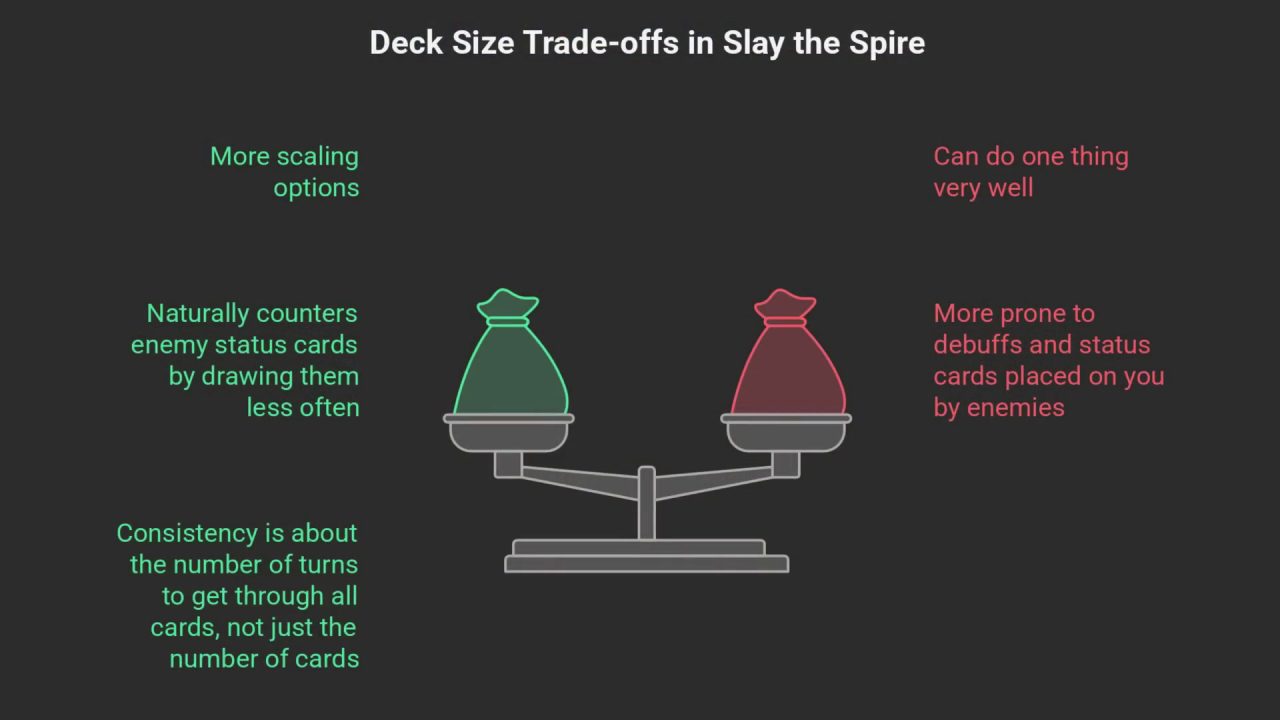
Deck size is a symptom, not the diagnosis
A large deck can still work when it has enough draw, redundancy, and fight-specific answers. A small deck can still fail when it lacks damage, block, or scaling. Strategy pages should teach players to judge why a deck is large, what each added card solves, and whether the next fight punishes slow access to key cards.
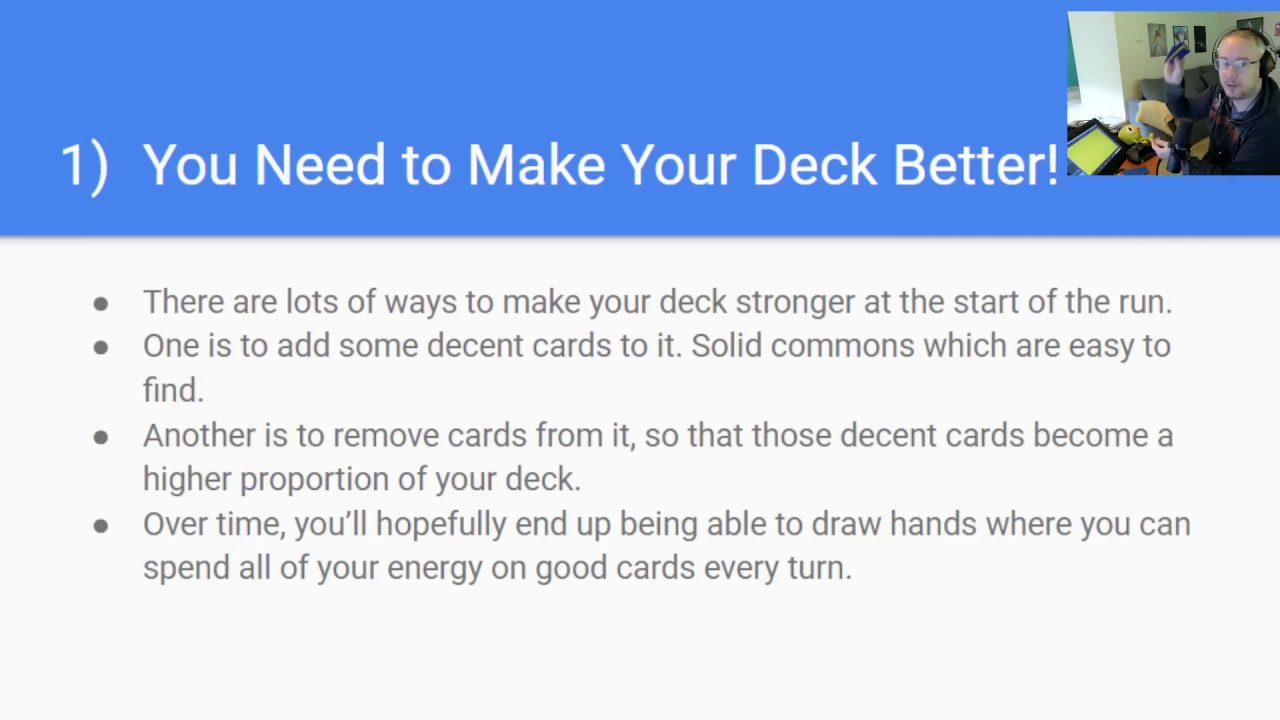
- Judge additions by job, redundancy, and timing instead of card count alone.
- Watch whether the deck can find block and damage before scaling matters.
- Link deck-size lessons into character build pages where the tradeoffs differ.
Extended beginner guides become route maps
Long beginner strategy videos should be distilled into route maps for returning players: what to check before an elite, when to rest, when to upgrade, and which mistakes matter most after the sequel changes enemy pressure. The final article should feel like a decision checklist, not a transcript.
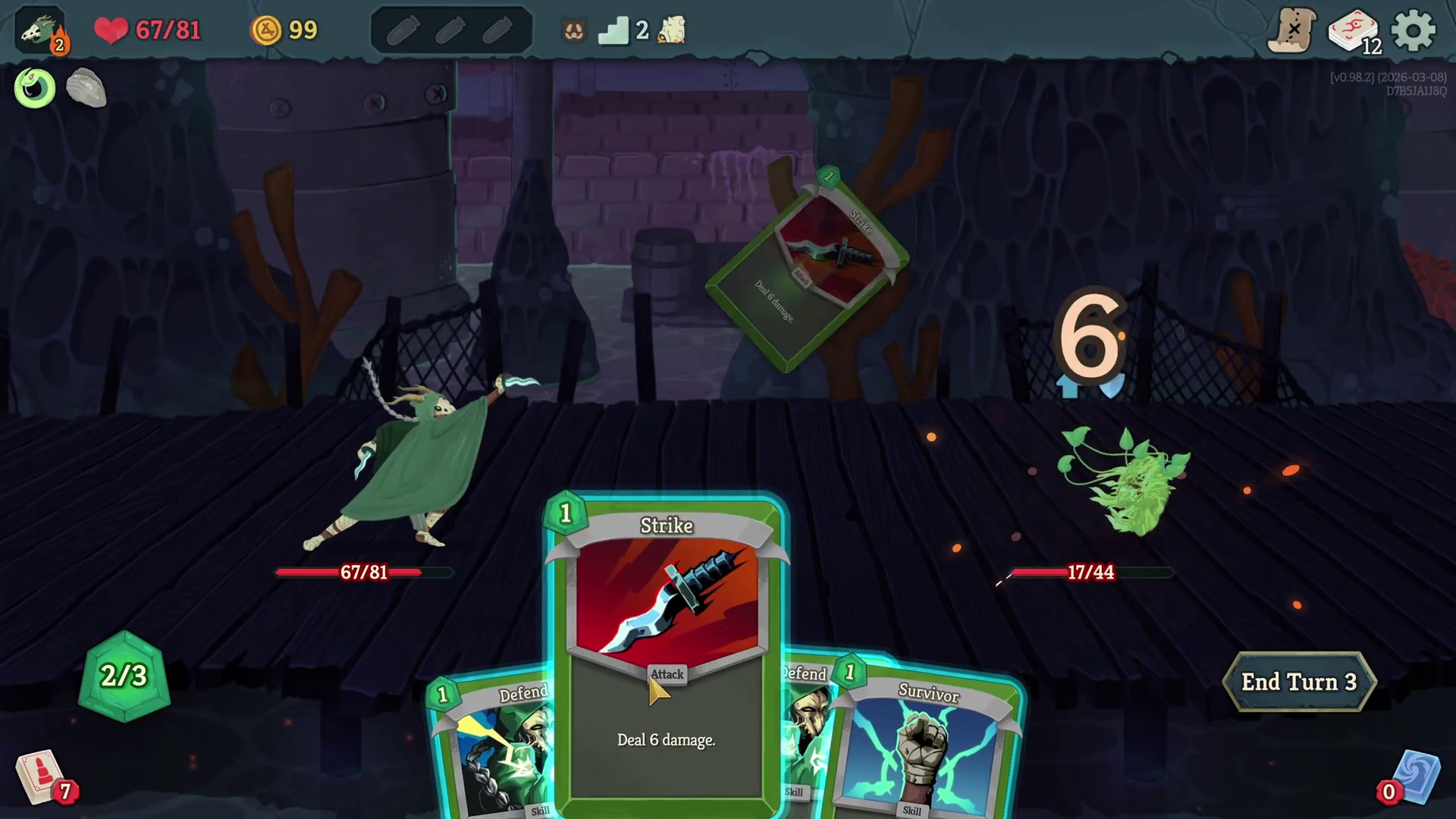
- Convert long-form tips into short route decisions readers can scan.
- Send character-specific examples to the relevant character pages.
- Keep repeated beginner advice only when it helps returning players relearn sequel pressure.
Act 1 losses are usually route and timing failures
Max-ascension Act 1 footage is useful because it shows how small greedy decisions compound before the deck has enough power. The strategy page should turn those examples into checks: whether the next elite is realistic, whether the deck needs damage before scaling, and whether the safest path is boring but correct.
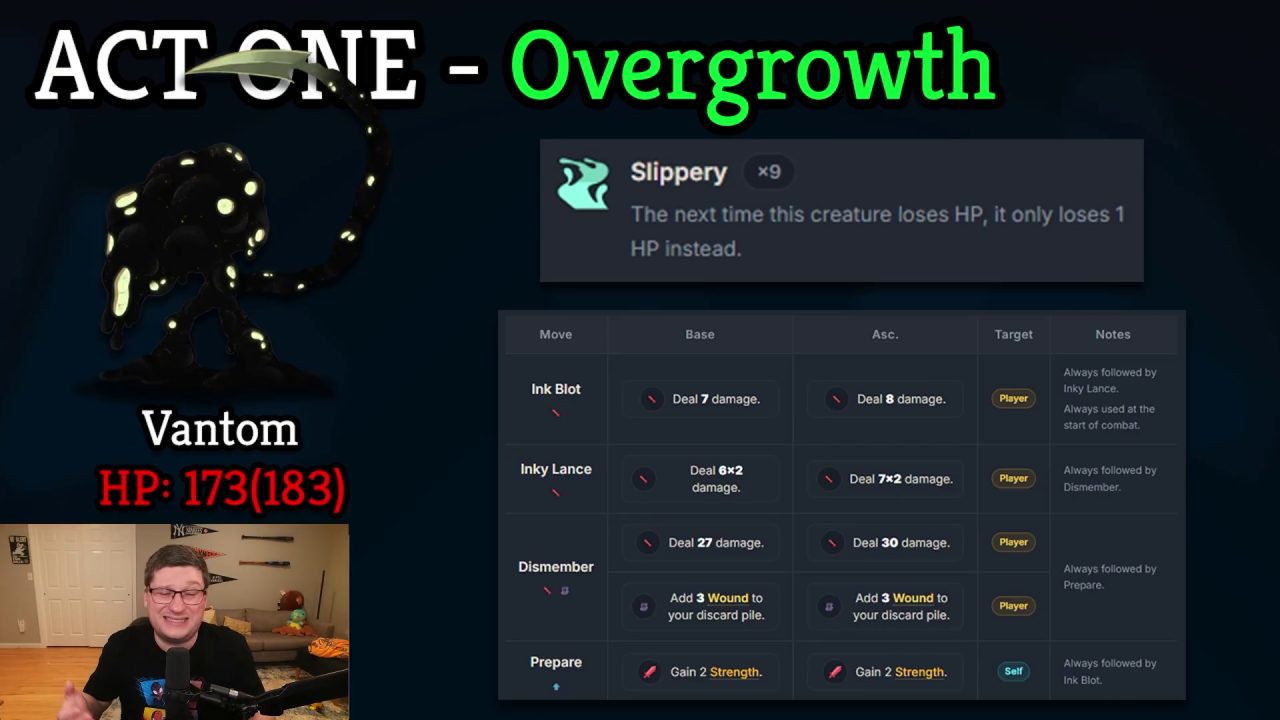
- Check if the deck can beat the next elite before chasing long-term scaling.
- Use rest, upgrade, and shop choices as route-risk examples.
- Connect Act 1 failures to character pages where the early fixes differ.
Replay footage belongs in review workflows
Replay-guide videos are useful when they help players review decisions after a run instead of chasing a single trick. The strategy page should use replay footage to teach what to tag: the first greedy pick, the first missed potion window, the first fight the deck could not solve, and the reward screen that changed the run direction.
- Tag one drafting mistake, one route mistake, and one combat mistake per reviewed run.
- Use replay notes to improve future route and reward decisions.
- Archive replay clips that do not expose a repeatable lesson.
Negative-status builds need risk accounting
Negative-status cards can look overpowered when the payoff is online, but the strategy page should track the cost before recommending them. The key question is whether the deck can absorb bad draws, status clutter, and boss pressure while still reaching the payoff turn.
- Explain what the deck gains for accepting status-card risk.
- Check whether bad hands become worse before the payoff appears.
- Link validated status builds to best-build and character pages only after repeated proof.
Editorial note
This page is part of the first English-only content batch. It is written conservatively for Early Access and should be tightened whenever a major patch changes public information or run data.