Relic database
Ancient Offerings
Starting-offering and Neow decision tracker
Ancient Offerings is an opening-choice page for judging starting options before normal relic rankings apply.
Opening context matters most
Downside, floor-one stability, first shop
Opening-offering note
Ancient offerings should be judged before the deck has normal relic context. The best offering is the one that makes the first route safer or more profitable without adding a downside the current character cannot absorb.
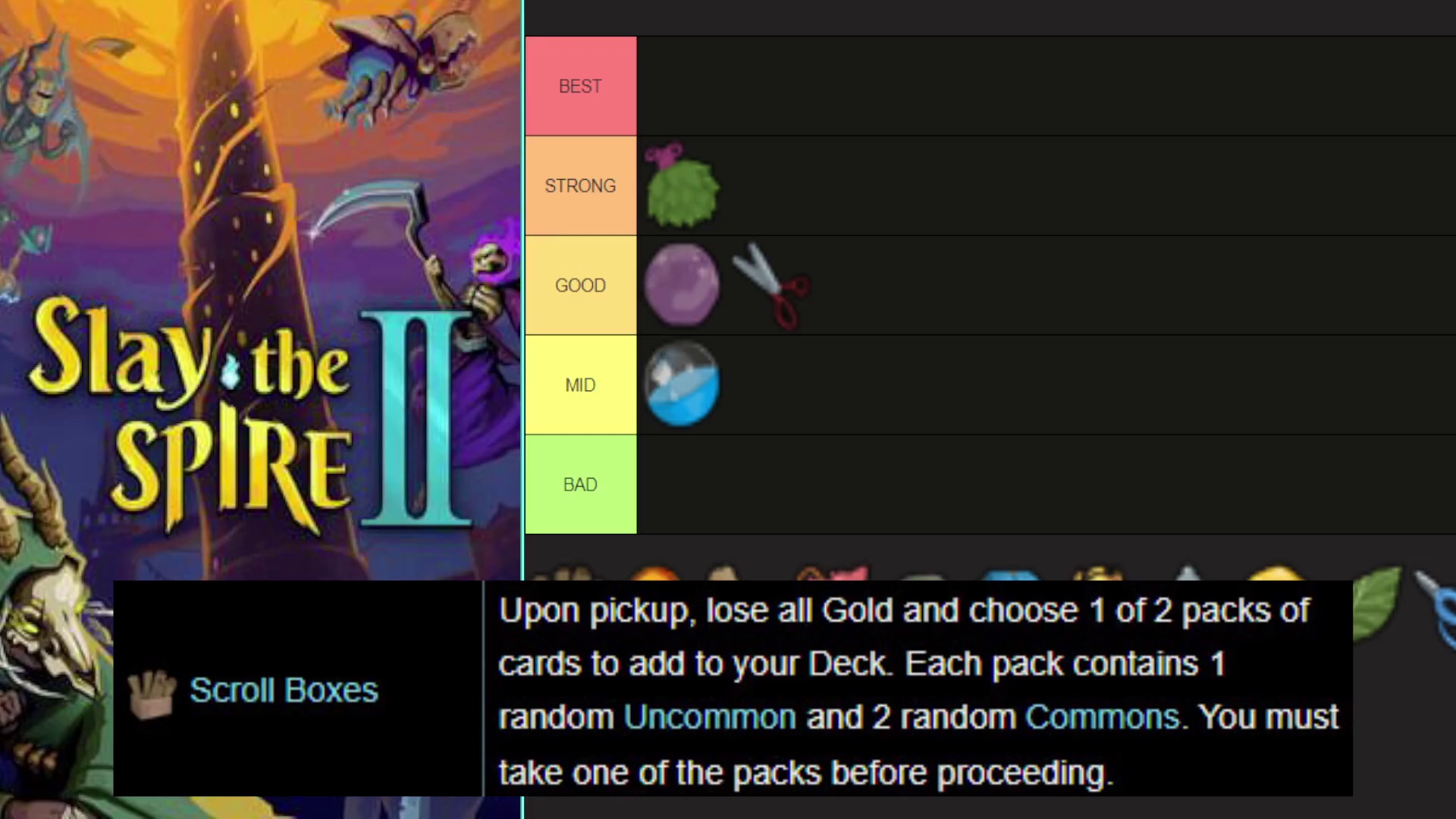
- Score the offering by first-route safety before long-run ceiling.
- Record the downside before ranking an offering highly.
- Compare the choice against first-shop, first-elite, and first-boss needs.
When to take a risk
Riskier offerings are better when the map gives time to stabilize or when the character already covers the downside. If the first route is hostile, a boring stable option can be correct.
Opening choice framework
Ancient Offerings should be evaluated before normal tier logic starts. Ask what the offering does to the first path: safer hallway fights, stronger first elite, better first shop, or a stronger boss plan. If the upside is delayed, the downside must be small enough for the current character to absorb.
- Take stability when the first route has forced fights or an early elite.
- Take economy when the first shop is reachable and the downside is manageable.
- Take high ceiling only when the character already covers the opening weakness.
- Downgrade any offering that makes the first boss preparation worse.
Downside tolerance
The same offering can be strong or dangerous depending on how the character handles its downside. A deck with early block, sustain, or front-loaded damage can absorb more risk. A deck that needs setup time should usually choose the offering that keeps the first route stable.